
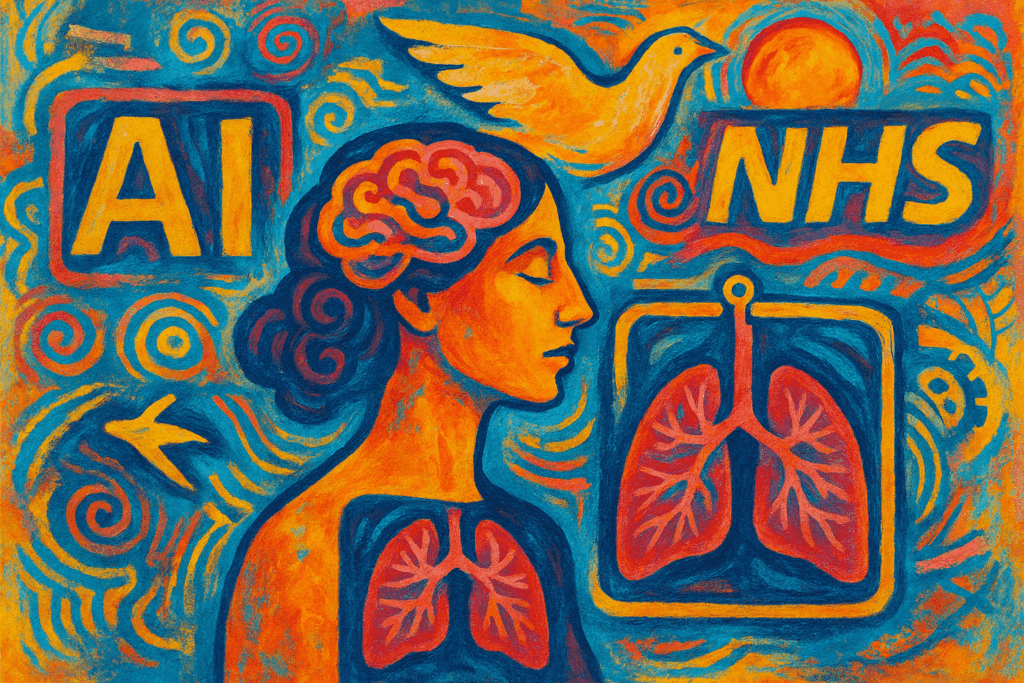
AI Revolutionizes NHS Diagnostics with Major Investment
The UK government has committed £20 million to roll out an AI X-ray tool for lung cancer across the NHS, alongside £8.1 million for new AI pilot programmes for other conditions. The funding aims to modernise diagnostic pathways, reduce waiting times and build a national evidence base for safe, scalable AI in healthcare.
Real-World Impact: Faster Diagnoses, Better Outcomes
Early deployments of the AI X-ray tool have already supported clinical teams assessing about 4 million patients, halving the median time from scan to diagnosis in some pathways from 8 days to 4 days. One patient case highlighted how faster reading of an abnormal chest X-ray led to earlier treatment. Clinicians remain in charge of decisions; the technology acts as a virtual second pair of eyes to flag findings and prioritise urgent cases.
Expanding Horizons: Beyond Cancer
The £8.1 million package funds pilots of next-generation AI and digital tools targeting conditions including heart failure, stroke and lung infections. Trials will evaluate AI across medical imaging and physiological data such as X-rays, CT scans and ECGs. The goal is to identify high-value tools with robust clinical evidence and to prepare for broader deployment by 2029.
Strategic Vision for UK AI Healthcare Adoption
This combined approach pairs a proven, immediately scalable lung-cancer tool with targeted innovation funding. It signals a national strategy that couples investment, clinical oversight and research partnerships to raise productivity and free clinical capacity. For investors and technology teams, the NHS offers a rare opportunity to test and scale AI at population level under clinical governance.
As pilots mature and evidence accumulates, the NHS intends to extend successful models across regions, positioning the UK as an early adopter of clinically governed AI diagnostics while keeping safety and clinician authority front and centre.