Artificial intelligence is reshaping medicine by improving detection, accelerating research and streamlining care delivery. Below is a compact guide to current uses of AI in healthcare and the near-term outlook for clinicians, researchers and health systems.
AI in Medical Diagnostics and Treatment
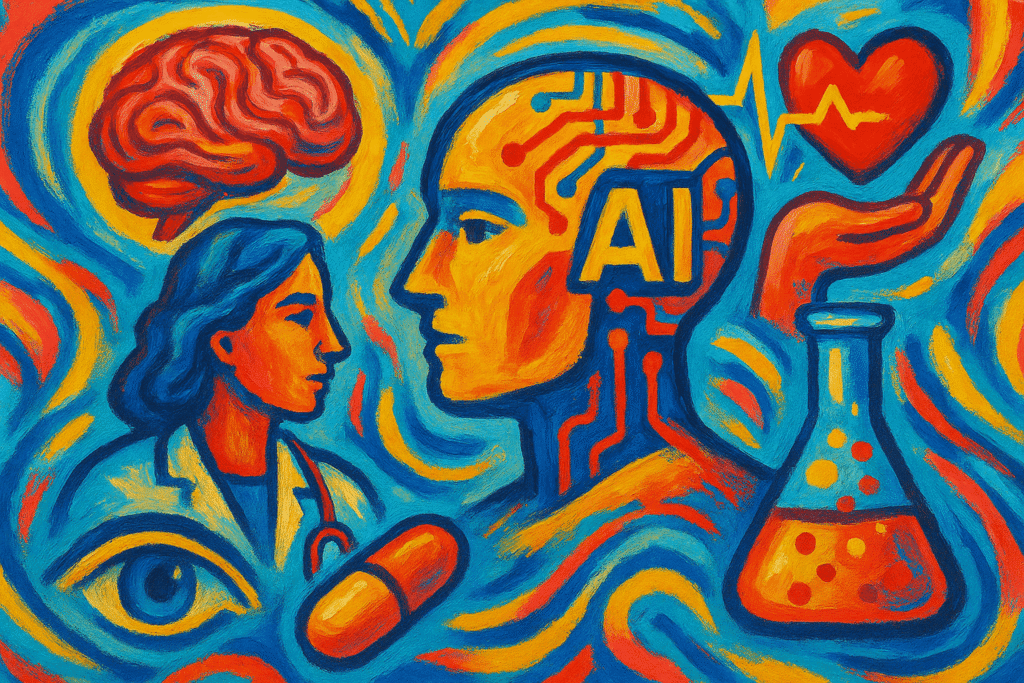
AI systems analyze imaging, pathology slides and clinical data to identify patterns that can be hard for humans to spot. In radiology and dermatology, machine learning models help flag early signs of cancer and other conditions. In genomics, algorithms interpret large datasets to recommend tailored treatment options. Clinical decision support tools prioritize likely diagnoses and suggest next steps, with clinicians keeping final authority. Explainability and integration with electronic health records make these tools practical at the point of care.
Advancing Drug Discovery and Operations
AI speeds drug discovery by predicting molecular interactions, proposing candidate compounds and identifying existing drugs that might be repurposed. In clinical trials, it matches patients more efficiently, improving recruitment and retention. On the operations side, AI optimizes scheduling, predicts patient flow, automates administrative tasks and triages routine inquiries through virtual assistants. These applications reduce bottlenecks and free clinicians to focus on complex care.
The Future of Health AI
Expect continued progress as models learn from larger, higher-quality datasets and as regulators publish clearer guidance. Key challenges include protecting patient privacy, reducing bias in training data and making model decisions transparent. The most promising path pairs AI with clinician expertise, using algorithms to extend human capabilities rather than replace them. Over the next decade, AI will play a larger role in remote monitoring, population health management and precision medicine, provided systems are evaluated rigorously and adopted responsibly.
This brief overview highlights where AI is already useful and where it is likely to contribute next in medicine. For practitioners and leaders, the priority is practical adoption that improves outcomes while safeguarding safety and equity.