
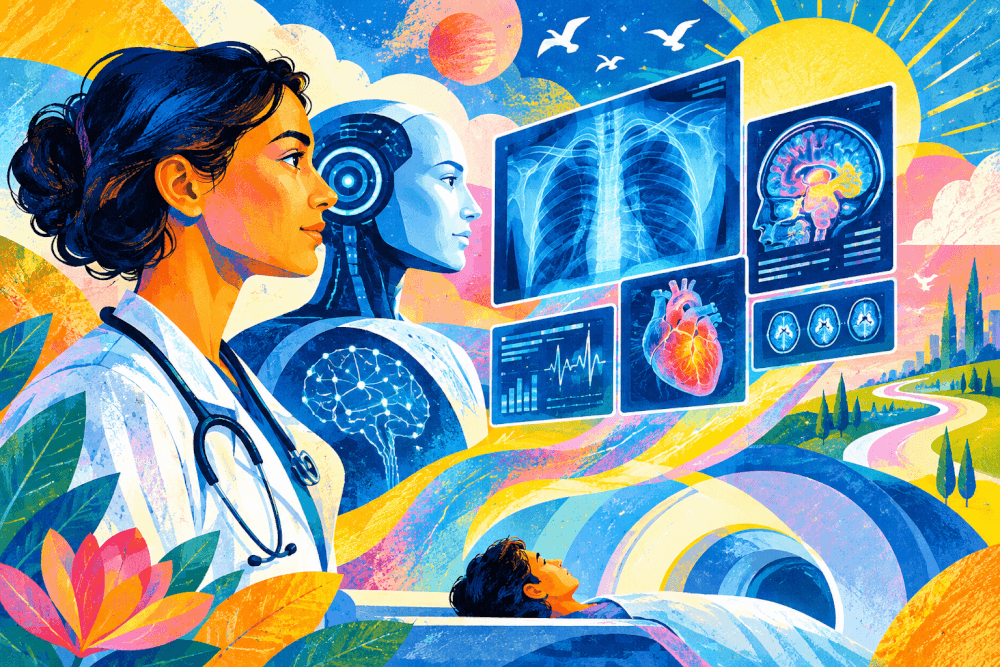
The pressure on clinical teams to deliver timely, accurate diagnoses is growing as patient complexity and data volumes rise. Artificial intelligence is emerging as a practical partner in diagnostic workflows, helping clinicians interpret images, prioritize cases, and combine diverse data streams for clearer clinical insight.
Tackling diagnostic challenges with AI
Diagnostic errors, long turnaround times, and clinician overload are common problems in modern health systems. AI tools address these issues by automating routine pattern recognition, triaging high-risk cases, and flagging inconsistencies across patient records. By sifting through imaging, labs, notes, and genomics, AI can surface likely diagnoses or suggest tests that narrow uncertainty, reducing time to actionable information.
Transforming accuracy and efficiency in clinical practice
Machine learning models trained on large, labeled datasets detect subtle signals that may be missed in busy clinics. In radiology, for example, AI assists with lesion detection and quantification; in pathology, it helps classify tissue patterns; in primary care, it can identify patients due for follow-up. These capabilities speed interpretation and raise overall diagnostic precision while allowing clinicians to spend more time on complex decision-making.
Empowering clinicians, improving patient outcomes
AI is most effective when it complements clinician judgment. Decision support systems present ranked differentials, confidence scores, and relevant evidence so clinicians of varying experience levels can make faster, more informed choices. Integration into electronic health records and lab systems streamlines workflows, reduces repeat testing, and shortens length of stay. For patients, this translates to earlier treatment, fewer missed diagnoses, and better recovery trajectories.
Successful deployment depends on data quality, transparent model behavior, clinician training, and ongoing performance monitoring. When implemented responsibly, AI tools become reliable assistants that improve diagnostic throughput and accuracy while preserving clinician oversight and patient safety.
As healthcare organizations adopt these systems, the focus should be on measurable outcomes: reduced time to diagnosis, improved diagnostic agreement, and higher clinician confidence across cases. That combination delivers better care and helps health systems manage rising demand.