AI’s Impact on Drug Discovery: Faster Pathways to Innovation
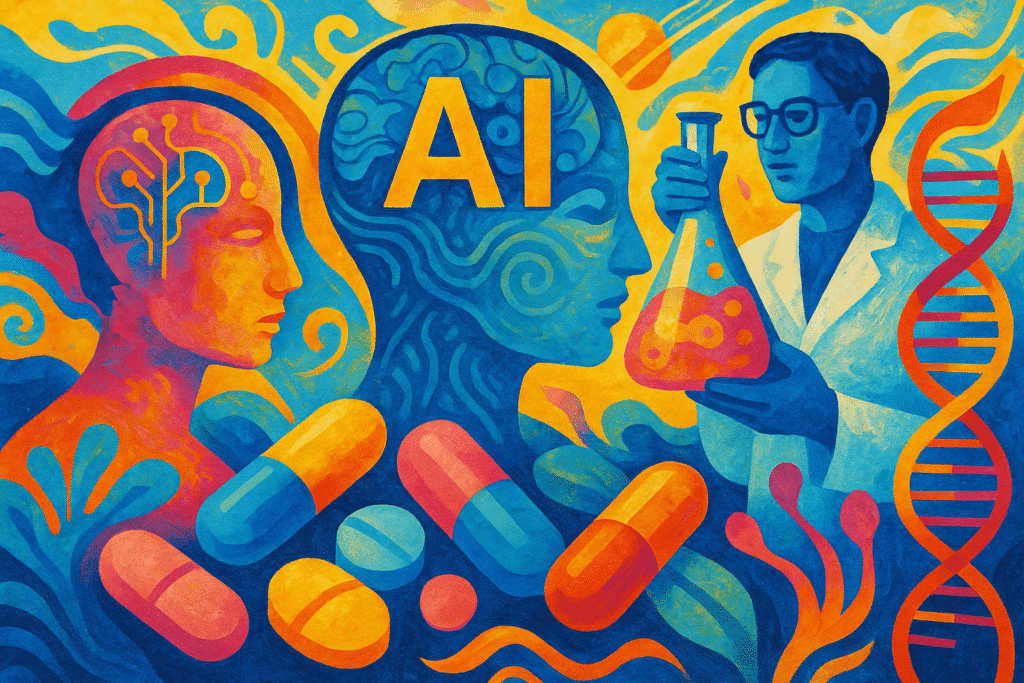
Artificial intelligence is moving beyond proof of concept to reshape how pharmaceutical teams find targets, generate leads, and design trials. By applying machine learning to biological data, companies cut weeks or months from early-stage workflows and focus lab resources on the most promising candidates.
Accelerating Key Stages
Target identification: Deep learning models now mine genomics, proteomics, and literature at scale to surface novel targets and prioritize those with therapeutic potential. AlphaFold’s protein-structure predictions have reduced uncertainty in target validation, enabling faster hypothesis testing.
Lead generation and optimisation: AI models perform virtual screening across billions of compounds and predict binding or ADMET properties. Startups and pharma groups use these tools to move from concept to synthesized leads in a fraction of the prior time. One publicized example used AI to produce a validated lead in under two months, compressing work that routinely took a year or more.
Real-World Applications and Promising Outcomes
Companies apply convolutional neural networks, graph neural networks, and generative models to distinct tasks: structure-based screening, de novo molecule design, and repurposing existing drugs. Successes include faster identification of candidate molecules, prioritization of biomarkers for trial selection, and improved predictive models for toxicity screening that reduce downstream attrition.
The Road Ahead for Pharmaceutical Research
Adoption will accelerate where data quality, interpretability, and regulatory alignment converge. Expect more hybrid workflows that combine AI predictions with focused experiments, and more partnerships between AI firms and big pharma. For executives and investors, the near-term payoff lies in reduced discovery timelines, lower early-stage costs, and clearer prioritization of pipeline projects. For researchers, AI opens faster hypothesis cycles and richer in silico experimentation.
AI will not replace domain expertise, but it will change how teams allocate it. Organizations that integrate robust models, curated data, and transparent validation will capture the greatest strategic advantage.