AI in Radiology: A Partner, Not a Replacement
Early fears that machines would replace radiologists have given way to a more practical reality: AI is becoming an indispensable partner in imaging departments. Rising imaging volumes and documented radiologist shortages across the US and Europe mean health systems are adopting AI to triage studies, speed reporting, and reduce routine tasks so clinicians can focus on complex cases and patient care. Clinical groups including Stanford Medicine and UC San Diego Health report implementation programs that treat AI as a tool to redistribute workload, not to remove human expertise.
How AI Addresses Radiology’s Growing Demands
Streamlining Workflows with Autonomous and Generative AI
Autonomous AI systems are already used in screening programs. Examples include diabetic retinopathy screening and algorithms that identify clearly normal chest radiographs for rapid reporting. These tools can safely clear low-risk studies, shorten turnaround times, and prioritize abnormal exams for human review. Generative AI helps by summarizing clinical histories, extracting prior reports, and drafting preliminary impressions that radiologists can edit. Combined, these capabilities reduce clerical burden and let radiologists spend more time on high-value interpretation and patient communication.
Augmented Intelligence: Improving Diagnostic Accuracy
Assistive AI acts as a second reader and measurement tool. Applications such as automated segmentation, quantitative lesion tracking, and decision support in breast imaging lower variability and support earlier detection. In practice, AI flags subtle findings, measures growth over time, and highlights areas for careful review, which improves consistency and supports multidisciplinary care planning.
The Imperative of Human Oversight in AI-Powered Radiology
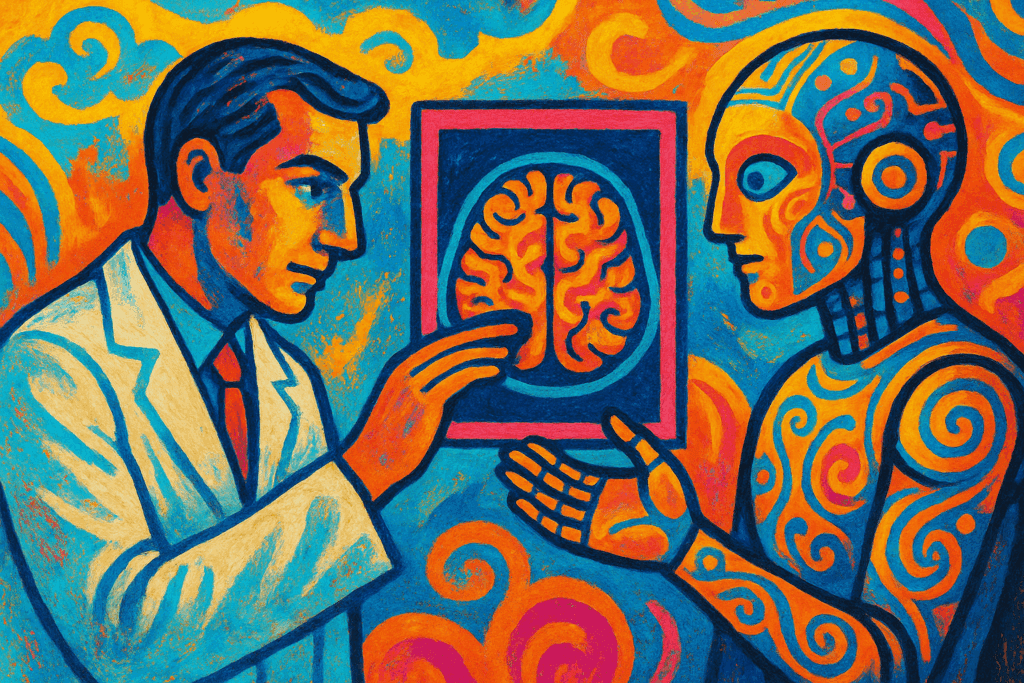
No AI system is perfect. Risks include algorithmic error, missed atypical presentations, and so-called hallucinations in generative outputs. Human oversight is required for final interpretation, medicolegal responsibility, and patient-facing communication. The future reading room will be highly automated – with autonomous triage, AI-assisted measurements, and draft reports – but radiologists will remain central to complex interpretation, quality control, and empathy-driven care. By combining machine speed with human judgment, radiology can meet demand while keeping patients first.