
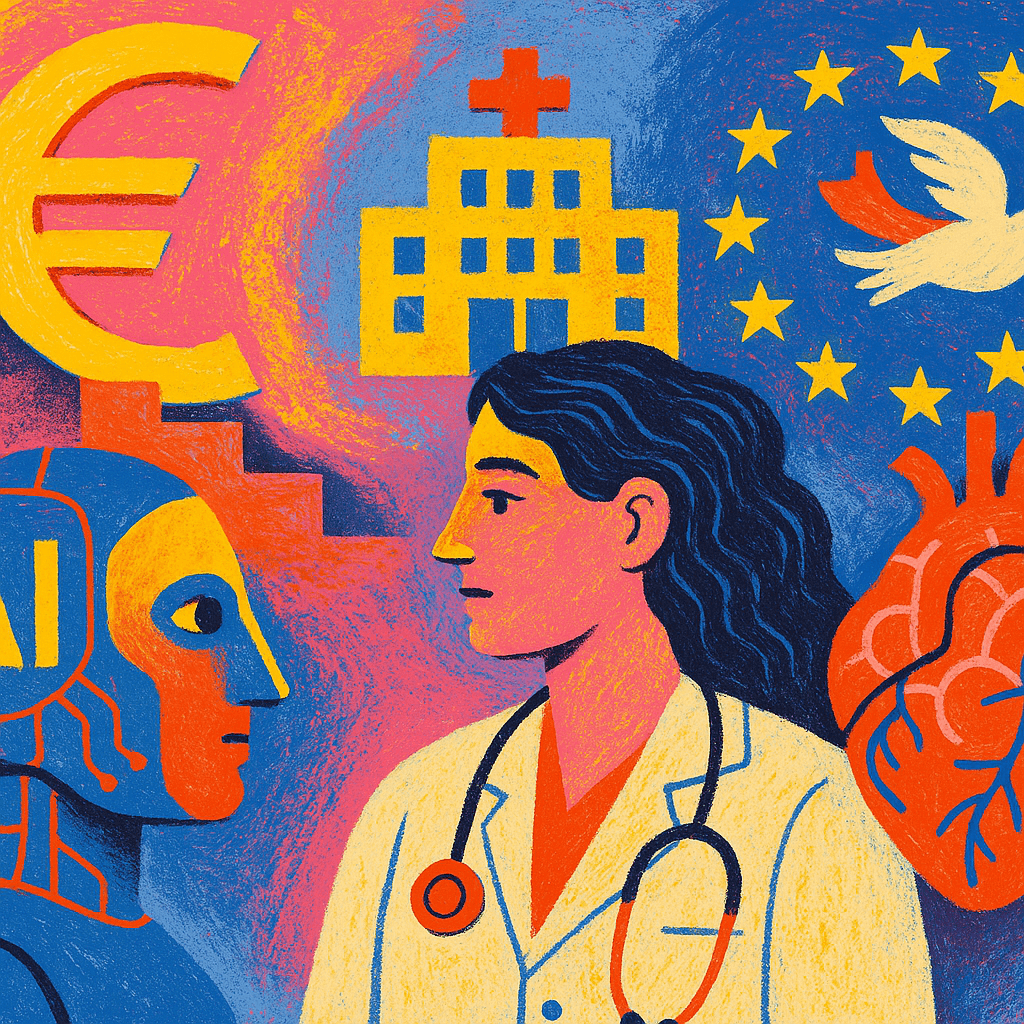
Europe’s AI Healthcare Pivotal Moment
Artificial intelligence is reshaping health systems across Europe. From faster diagnostics to tailored therapies and more efficient hospitals, AI tools are moving from research labs into clinical settings. At the same time, ethical questions, fragmented data, and uneven system readiness are creating a complex policy and operational landscape.
Unlocking AI’s Potential
AI is already delivering measurable value in several areas. In diagnostics, machine-learning models are improving image interpretation and flagging early disease signals. In personalized medicine, AI helps match therapies to genetic and clinical profiles. Hospital operations benefit from predictive scheduling, capacity planning, and workflow automation that reduce delays and costs. Biomanufacturing uses AI for process control, quality prediction, and scaling production of biologics. Collectively these applications can raise care quality and speed innovation.
Complex Challenges
Adoption faces serious headwinds. Data governance and privacy rules vary across member states, producing fragmentation that limits training data and model transferability. Ethical risks include algorithmic bias, opaque decision-making, and liability gaps when AI informs clinical care. Many providers lack technical infrastructure and workforce skills to deploy and monitor AI safely. Turning rules into routine practice will require attention to clinical validation, procurement practices, and long term maintenance.
A Proactive Regulatory Framework
European institutions are building a governance stack to address risks. The AI Act applies a risk based approach to high risk medical systems and sets obligations for transparency and oversight. The European Health Data Space aims to standardize data access, metadata and consent mechanisms to enable cross-border research while protecting patients. The proposed European Biotech and Biomanufacturing Act targets industrial scale up and supply chain resilience for advanced therapies. Together these measures aim to protect patients while keeping Europe competitive.
The Path to Coherent Implementation
Realising AI’s benefits will depend on aligning policy, funding, standards and clinical practice. Priorities include interoperable data standards, pragmatic regulatory guidance, robust clinical evaluation and sustained investment in skills and infrastructure. Public engagement and transparent governance will be vital to sustain trust. Europe can lead in responsible health AI, but speed and coordination will determine whether potential becomes everyday clinical value.