Europe’s AI Drug Discovery Momentum
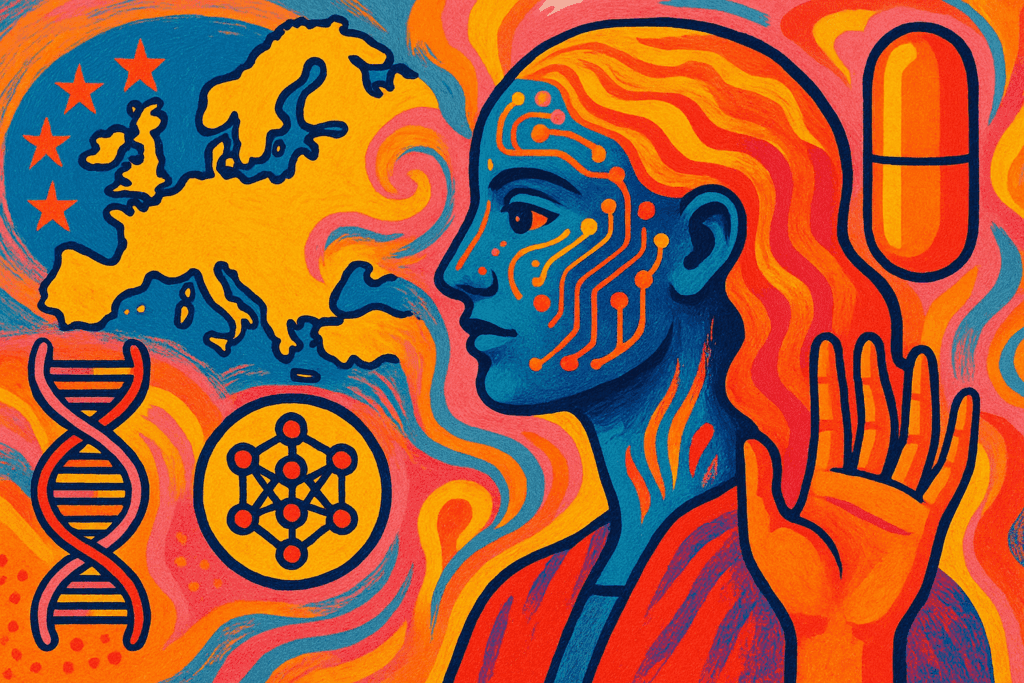
AI-driven drug discovery in Europe is moving from pilot projects to scalable programs, driven by investments from biotech startups, pharmaceutical groups, and technology firms. The market is growing rapidly and is forecast to expand at a strong double-digit compound annual growth rate as computational methods shorten timelines and reduce early-stage costs. The core benefit is faster identification of viable candidates and more efficient prioritization of targets.
Catalysts for Growth and Innovation
Several forces are accelerating adoption: the need to compress long development cycles, cost pressure across R&D, and wider access to high-performance computing. Machine learning and deep learning power predictive models for target identification, while generative AI is beginning to produce novel molecular structures for de novo design. Improved simulation tools and integration of multi-omic datasets also increase hit rates and lower attrition in lead optimization.
Regional Highlights and Strategic Partnerships
Germany, the United Kingdom, France, and Spain are the most active European hubs, each contributing distinct strengths from computational talent to translational infrastructure. Partnerships between large pharma, nimble biotech, and cloud and AI vendors are common. These collaborations pool datasets, share validation pipelines, and accelerate translational work from in silico predictions to preclinical validation.
Addressing Hurdles, Unlocking Potential
Key obstacles include strict data privacy rules, a shortage of interdisciplinary talent fluent in both biology and advanced modeling, and significant infrastructure costs for computing and data management. Overcoming these issues will require targeted training programs, standardized data governance frameworks, and funding models that support shared compute and curated datasets.
The Road Ahead for AI in European Pharma
Europe is positioned to be a major center for AI-enabled drug discovery. Continued innovation will come from generative approaches, closer public-private collaborations, and validation of AI-discovered candidates in clinical pipelines. For investors and researchers, the coming years should reveal which models and partnerships deliver reproducible clinical impact.