
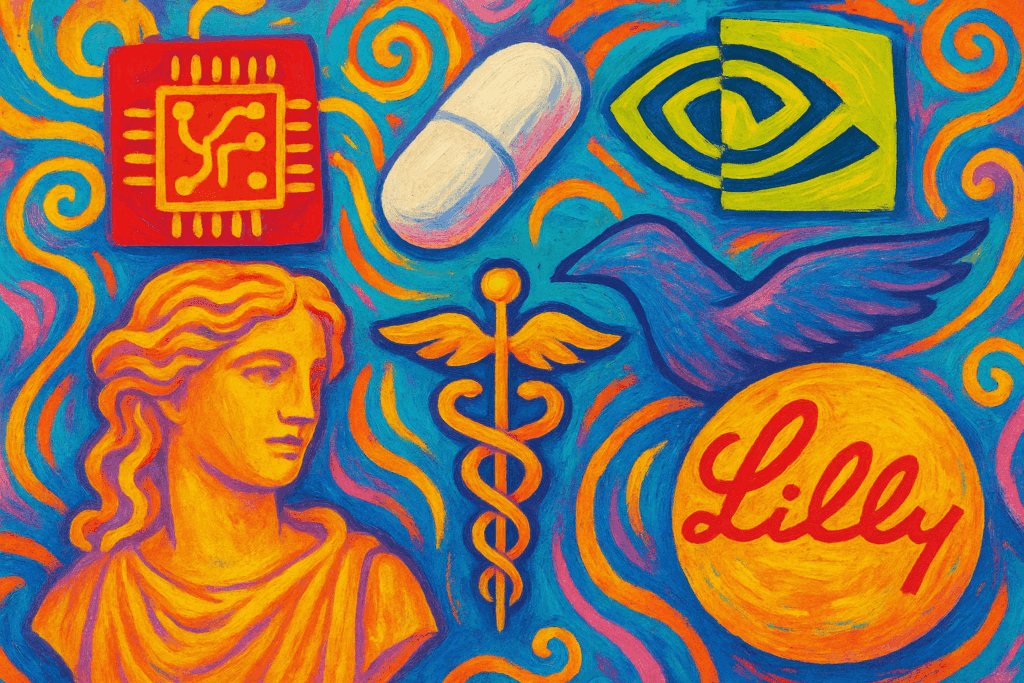
Eli Lilly & Nvidia: Supercharging Drug Development with AI
Eli Lilly has partnered with Nvidia to build “Lillypod,” a dedicated supercomputing initiative intended to bring artificial intelligence deeper into drug discovery and development, according to industry reporting by Fierce Biotech. The move signals a more aggressive push by a major drugmaker to pair proprietary science with large-scale AI infrastructure.
“Lillypod”: A New Era in Research
Lillypod will combine Lilly’s drug research expertise with Nvidia’s high-performance GPUs and AI software stack to run large-scale models, molecular simulations, and data integration workflows. The platform is designed to support generative chemistry, predictive models for efficacy and safety, and faster analysis of preclinical and clinical datasets. By hosting these workloads on a purpose-built system, Lilly aims to shorten iteration cycles that typically stretch drug programs.
Reshaping Pharma’s Future
Lilly describes the strategy as a way to escape the traditional pharma industry lifecycle where long timelines and high attrition rates drive costs. With a high-throughput AI platform, the company expects to identify promising candidates earlier, prioritize compounds with better translational potential, and compress discovery timelines. For patients that could mean faster progression of promising therapies into clinical testing and, if validated, earlier access to new treatments.
Broader Impact on Biotechnology
The Lilly-Nvidia partnership underscores a growing pattern: large biopharma firms investing in in-house AI infrastructure rather than outsourcing every capability. This could prompt competitors to adopt similar architectures or form new alliances with chip and software providers. Risks remain, including model generalizability, data governance, regulatory acceptance, and the high cost of specialized compute. Still, Lillypod represents a high-profile example of how AI compute platforms are becoming core assets for next-generation drug development.
Reported by Fierce Biotech, this initiative will be watched closely by investors, researchers, and regulators as the industry tests whether scaleable AI compute can materially change how medicines are discovered and brought to market.