Unveiling Genetic Insights for Mental Health
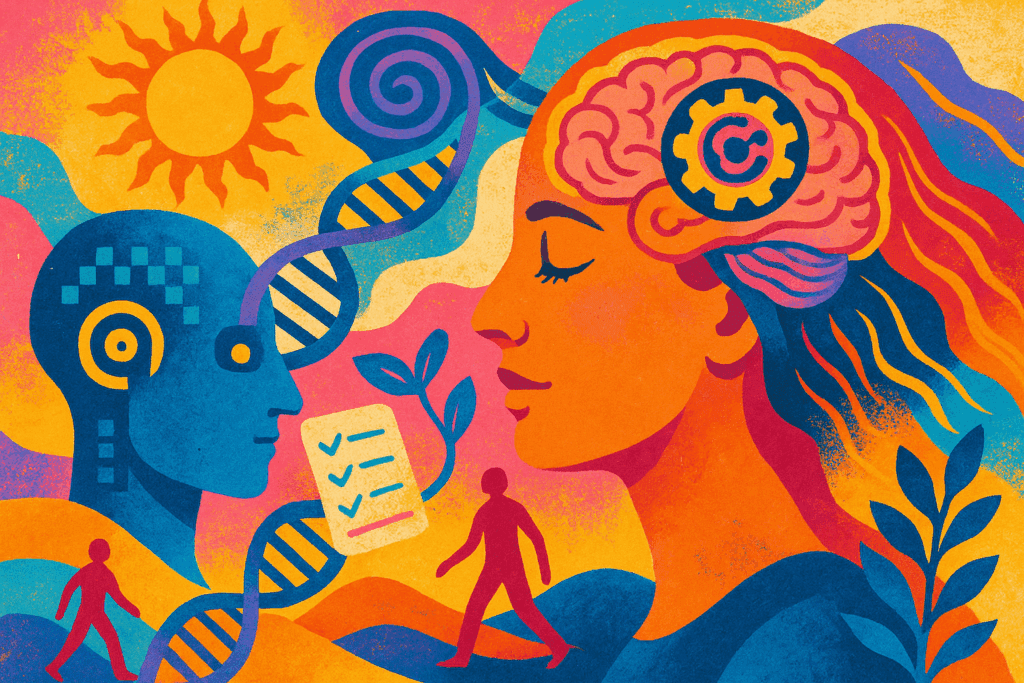
NHS England has launched a major study recruiting 50,000 people with severe mental illness to collect DNA samples and detailed questionnaire data. The project aims to link genomic variation with clinical features such as symptom patterns, treatment response and illness severity for conditions including schizophrenia and severe depression.
AI’s Pivotal Role in Precision Psychiatry
AI and machine learning are essential to process the scale and complexity of combined genomic and phenotypic data. Algorithms will generate polygenic risk scores, perform high-dimensional pattern discovery, and run unsupervised clustering to identify patient subgroups that share biological signatures. Natural language processing can extract symptom detail from questionnaire text while multimodal models integrate genetic markers with clinical and environmental factors.
Methods such as federated learning can protect patient privacy while allowing model training across multiple NHS sites. Causal inference tools and explainable AI techniques will help researchers interpret which genetic signals are most predictive of outcomes and which may point to therapeutic targets.
A New Era of Targeted Treatments
By translating AI-derived biomarkers into stratified clinical pathways, the study aims to move psychiatry toward more personalised treatment selection. That could mean predicting which patients will respond to a particular medication, which require early intensive support, or which are at higher risk of relapse. As Dr Adrian James said, this represents the “dawn of a new era of personalised treatments.”
Beyond Mental Health: AI’s Broader Impact on Healthcare
This initiative mirrors a wider shift in healthcare where predictive analytics and genomic AI reshape diagnostics, clinical trials and service planning. For clinicians and researchers, the study will be an early test of how responsibly applied AI can convert large-scale biological data into actionable care strategies.
What to watch: publication of predictive models, open-access biomarkers, and early clinical trials that use AI-driven stratification to match patients to treatments.