AI Transforms Traditional Chinese Medicine
Artificial intelligence is being layered onto centuries-old TCM practices to support diagnostics, prescription design, and research. Chinese startups and academic teams train models on clinical records, tongue and facial images, and pulse wave signals to produce reproducible assessments that can speed triage and standardize record keeping. Governments in China are funding large datasets and pilot programs that move these tools from clinics into broader public health initiatives and overseas partnerships under the Health Silk Road agenda.
Practical Applications and Global Reach
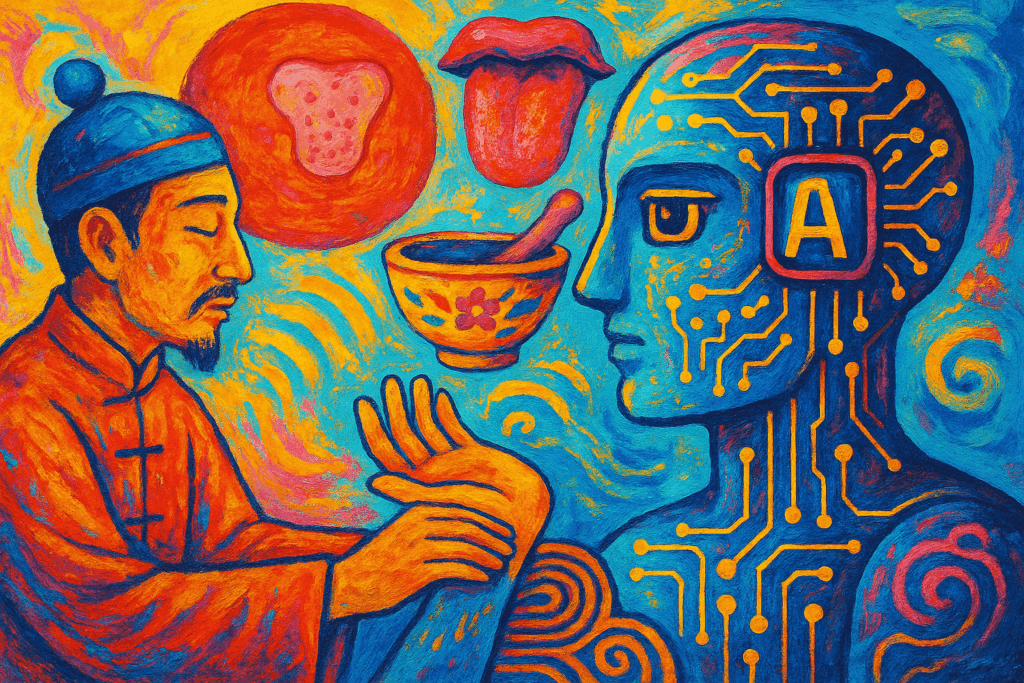
On the clinical front, AI-powered tongue scanners and optical analysis systems pair image recognition with symptom databases to flag patterns associated with specific syndromes. Electronic pulse readers convert wristwave data into digital features that models correlate with diagnoses. Prescription support systems suggest herbal formulas based on mapped symptoms and herb-compound databases. In research, machine learning helps with molecular analysis and compound mapping, accelerating discovery of active ingredients and predicting herb-drug interactions. Consumer wearables are adopting biometric sensors and TCM-informed interfaces to offer personalized suggestions and remote monitoring, widening access beyond traditional clinics.
The Nuance: AI’s Limitations and Human Expertise
TCM relies on abstract concepts such as qi, yin, and yang that resist simple quantification. Practitioner judgment, patient narrative, and contextual reasoning remain central. Data used to train AI can reflect regional practice patterns and diagnostic subjectivity, producing biases or overconfident recommendations. Regulatory frameworks and clinician oversight are required to interpret model outputs, avoid incompatible herb-drug combinations, and respect cultural dimensions of care.
Patients and practitioners respond with a mix of interest and caution. Many value improved access and second opinions. Others worry about reduction of holistic assessment to discrete variables. The current trajectory positions AI as an assistive tool that can extend reach and accelerate research while leaving interpretation and ethical decision making to human experts.