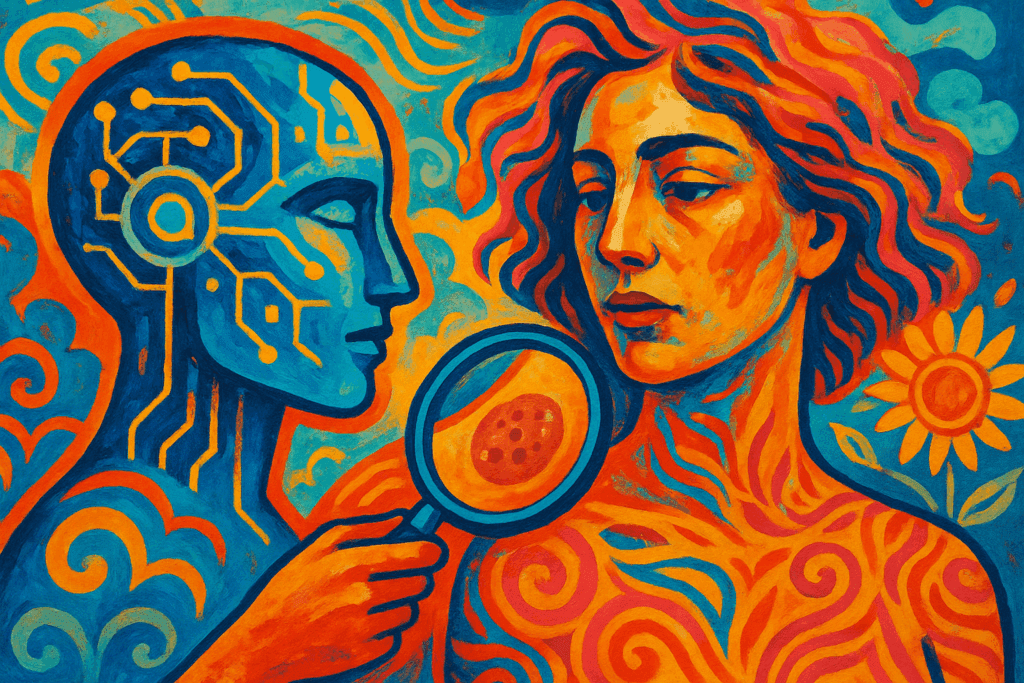
Artificial intelligence is moving from research labs into dermatology clinics. Recent reviews of AI in dermatopathology show clear gains in diagnostic precision and earlier detection of common skin cancers, while also highlighting important gaps before wide clinical use.
AI’s Growing Role in Skin Diagnostics
Convolutional neural networks and vision transformers power most image-based tools, delivering high sensitivity and specificity for conditions such as melanoma, basal cell carcinoma, and benign nevi. New large language models adapted for medicine, including prototypes called SkinGPT and multimodal systems like Gemini, add triage, reporting, and patient-facing support. Together these models can speed case review, flag high-risk lesions for faster biopsy, and reduce repetitive scanning tasks that burden dermatopathologists.
Performance is strongest where labeled image data are abundant. In many studies AI matches or exceeds non-specialist clinician accuracy and acts as a second reader that improves overall detection rates. That makes AI attractive for screening programs and teledermatology, especially in areas with limited specialist access.
Strengths, Limitations, and the Road Ahead
Despite promising results, limitations are substantial. Rare diseases and atypical presentations suffer from sparse, biased training data, producing lower reliability. External validation, prospective trials, and consistent reporting standards are still scarce. Regulatory pathways vary by region and many models lack transparent explainability, complicating clinical trust and medico-legal responsibility.
Ethical concerns include dataset bias, patient privacy, and the risk of overreliance on automated outputs. Practical steps to address these issues include building diverse, annotated datasets, running real-world prospective studies, adopting federated learning to protect data, and developing clear guidelines for clinician oversight and informed consent.
Short term, AI will act as decision support rather than replacement, improving workflow and early detection. Over the next few years expect more multimodal tools, stronger external validation, and clearer regulation that together will determine whether AI becomes routine in dermatopathology or remains an adjunct for specialized settings.