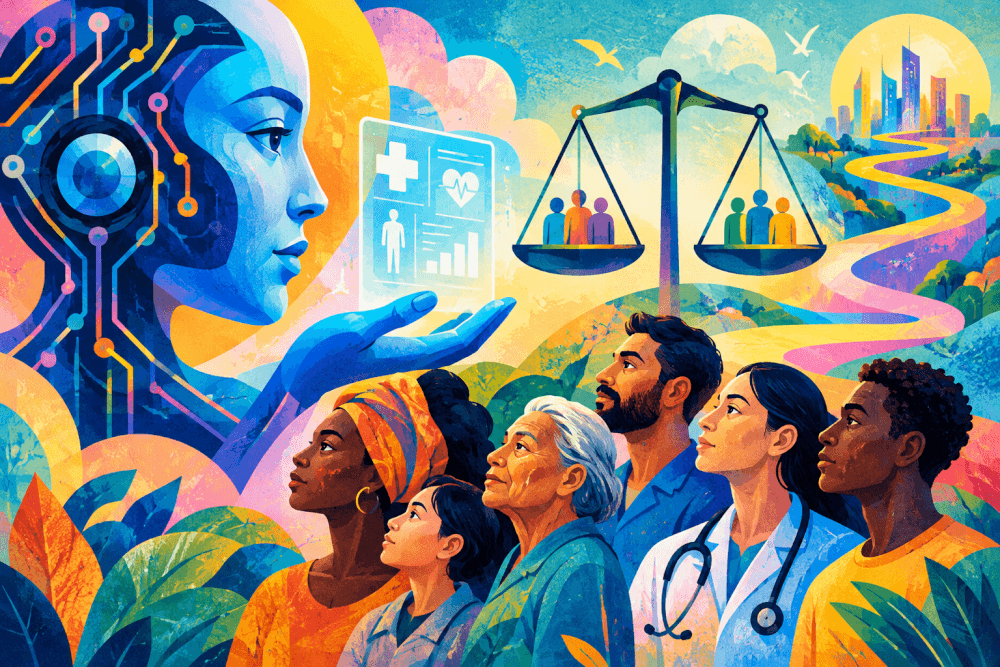
Artificial intelligence is rapidly entering clinical practice, from triage tools to predictive models. While these systems can improve efficiency and access, they can also reproduce and amplify existing health inequities when equity is not defined and measured from the start.
The Equity Blind Spot in AI Development
Many AI projects use operational proxies instead of direct health measures. Examples include training models on cost or utilization rather than disease burden, and using datasets that underrepresent nonwhite skin tones, women, older adults, and people with disabilities. Without a clear, operational definition of health equity, performance metrics can mask disparate outcomes. A model with high average accuracy can systematically underperform for subgroups, leading to delayed diagnoses, inappropriate risk scores, and unequal access to interventions.
Protecting Vulnerable Populations and The Need for Human Oversight
Patients with disabilities face layered risks: limited representation in training data, inaccessible interfaces, and clinical pathways that assume normative functioning. Algorithms that omit functional measures or communication needs can misclassify severity and recommend unsuitable care. Human clinicians remain essential for context-sensitive judgment. Evaluations should measure combined human-AI workflows, not just algorithm-only metrics, so clinicians can spot and correct subgroup errors before harm occurs.
Towards Responsible AI: Governance and Collaboration
Mitigating bias requires governance structures that prioritize equity every phase of development. Practical steps include:
- Define measurable equity goals tied to patient outcomes and stratify performance by race, sex, age, disability status, and socioeconomic indicators.
- Curate and augment datasets to improve representation, and publish subgroup performance transparently.
- Form interdisciplinary teams that include clinicians, data scientists, ethicists, and patients to guide design, testing, and monitoring.
- Conduct prospective, real-world monitoring and rapid remediation when disparities emerge.
AI can expand access and quality, but only if developers and health leaders prioritize equity from design through deployment. Otherwise, smart tools risk producing unfair outcomes for the very groups that need better care.