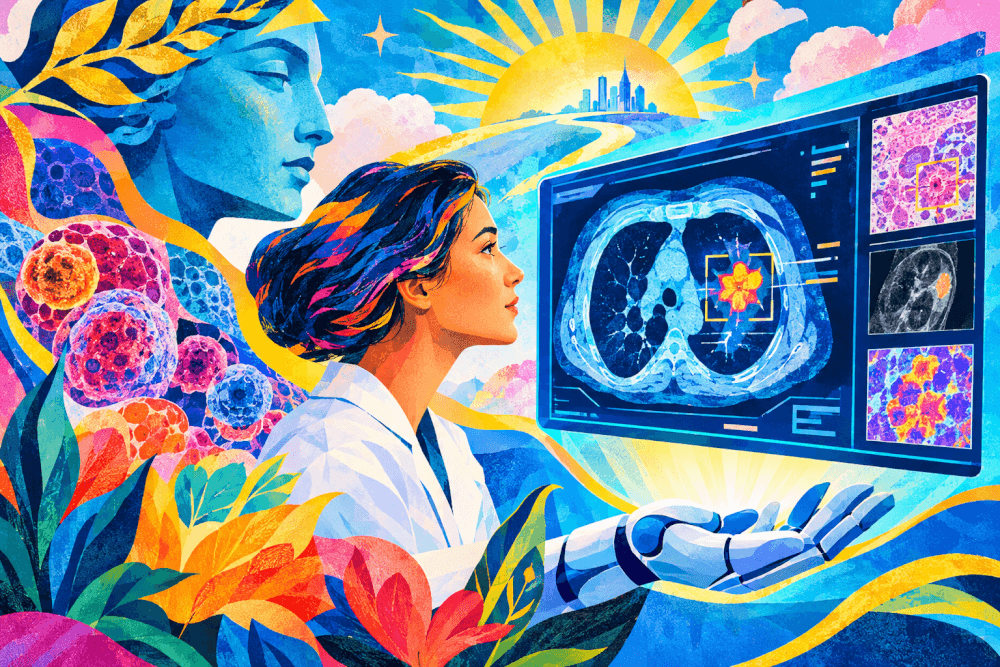
Early detection saves lives, yet subtle signs on scans can be missed. Recent advances in artificial intelligence are changing that, delivering faster, more accurate reads for radiology and pathology. Modern algorithms now flag tiny abnormalities, prioritize high-risk cases, and support clinicians in making earlier, better-informed decisions.
Precision Diagnostics: Spotting the Unseen
Deep learning models, especially convolutional neural networks, analyze mammograms, CTs, and MRIs to detect patterns invisible to the human eye. Radiomics extracts quantitative features from images to reveal tumor signatures. The result is higher sensitivity and specificity, fewer false positives and false negatives, and shorter turnaround for image interpretation. Many clinical centers use AI to triage studies, so radiologists review the most urgent cases first and spend more time on complex findings.
Beyond Imaging: AI’s Broader Impact on Cancer Care
AI is not limited to scans. Digital pathology tools assess tissue slides with granular precision, assisting pathologists in grading tumors and identifying biomarkers. Predictive models combine imaging, pathology, and electronic health record data to estimate treatment response and recurrence risk, helping oncologists personalize therapy. By bringing information together, these tools increase the chance of timely intervention and may improve long-term outcomes for patients.
The Road Ahead: Challenges and Opportunities
Adoption faces hurdles: data quality, model bias, regulatory review, workflow fit, and clinician trust must all be addressed. Privacy and interoperability remain open questions. Promising solutions include federated learning to share insights without centralizing data, rigorous multicenter validation, and human-AI workflows that keep clinicians in control. With careful deployment and monitoring, AI can scale proven benefits across health systems.
AI is reshaping early cancer detection by turning complex image data into actionable signals. As tools mature and clinical evidence grows, earlier diagnoses and more precise care are becoming achievable goals for patients and providers alike.