Introduction
Artificial intelligence is moving from promise into routine use across diagnostic medicine. Algorithms now support image interpretation, triage, and pattern detection. Clinicians, administrators, and policymakers must weigh clear operational gains against risks to equity, accountability, and clinical judgement.
AI’s Impact: Accelerating Diagnosis and Efficiency
AI in Radiology and Pathology
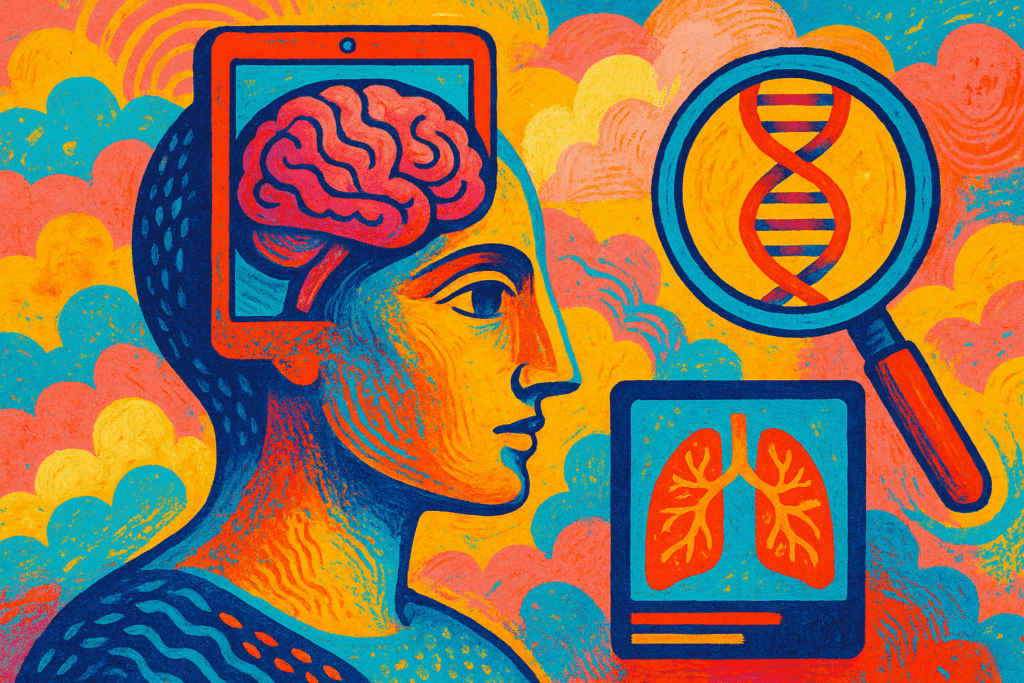
Deep learning models have shown capacity to detect cancers, strokes, and other conditions on imaging and slides faster than traditional workflows. Several tools have received regulatory clearance and are used to flag findings, quantify lesions, and prioritize urgent cases.
Boosting Clinical Workflows
When integrated as decision support, AI can reduce reporting times, cut backlog, and help teams triage cases. That can partially address workforce shortages while allowing clinicians to focus on complex cases and patient communication.
Addressing AI’s Pitfalls and Hurdles
Risks: Bias and Over-Reliance
Studies show AI can reproduce or amplify existing data biases, producing worse performance for underrepresented groups. Automation bias is a danger when clinicians defer unduly to algorithm outputs, which can lead to missed or incorrect diagnoses when models encounter unfamiliar presentations.
Organizational and Ethical Questions
Opaque models, unclear lines of responsibility, and limited clinician training complicate adoption. Legal accountability for AI-assisted decisions remains contested, and patients need transparent explanations about how algorithmic inputs inform their care.
The Path to Responsible AI Integration
Frameworks for Success
Responsible deployment requires prospective validation, representative training data, and continuous monitoring after rollout. Clear performance thresholds, routine recalibration, clinician-facing explainability, and post-market surveillance should be standard parts of procurement and governance.
Collaborative Future
The most resilient models are human-in-loop systems where AI augments clinician judgement rather than replaces it. Governance structures that assign oversight, mandate training, and communicate limits to patients will help preserve trust while capturing AI’s practical benefits.
Applied sensibly, AI can speed and sharpen diagnosis while preserving patient safety, equity, and clinician responsibility.