AI’s Transformative Role in Biotechnology: A Market Outlook
The biotechnology market is expanding as AI moves from experimental projects to embedded workflows across research, development and operations. AI is no longer peripheral; it is reshaping target identification, diagnostics, manufacturing and trial design, compressing timelines and improving predictability across the value chain.
Accelerating Drug Development and Precision Diagnostics
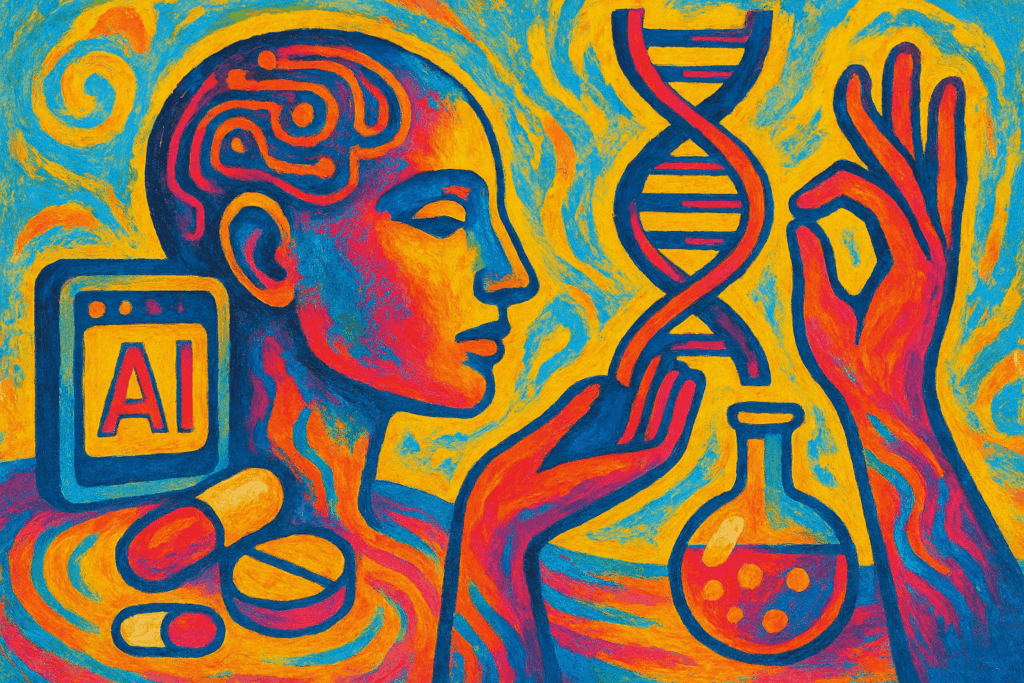
AI accelerates drug discovery by mining large biological and chemical datasets to surface novel targets and candidate molecules. Machine learning models speed target identification and virtual screening, often reducing early-stage discovery from years to months and raising hit rates per campaign. Structure prediction tools have shortened protein characterization, enabling faster lead optimization and more informed medicinal chemistry.
In diagnostics and genomic sequencing, AI sharpens variant calling, integrates multiomic signals and improves early detection through pattern recognition in imaging and sequencing data. That yields higher diagnostic accuracy and more timely, tailored treatment decisions. Real-world examples include AI systems that prioritize actionable variants and models that flag likely responders for targeted therapies.
Optimizing Biomanufacturing and Supply Chains
On the production side, AI optimizes fermentation and cell culture by modeling process parameters, reducing batch variability and lifting yields while lowering unit costs. Predictive maintenance and digital twins minimize downtime and increase throughput. Automation guided by AI reduces manual intervention and improves reproducibility.
Supply chains benefit from demand forecasting, inventory optimization and cold chain monitoring driven by advanced analytics. These systems reduce stockouts and spoilage risk, improving resilience and operational margins for biologics and personalized therapies.
The Future of Biotech: An AI-Driven Frontier
AI is the primary engine driving the next phase of biotech growth. Expect continued investment in AI-native platforms that enable personalized medicine, adaptive clinical trials and refined patient stratification, shortening development cycles and lowering failure rates. The most successful organizations will combine domain expertise with robust data infrastructures and model governance to convert data into safer, faster, and more precise treatments. For insiders, the mandate is clear: build data-first capabilities and integrate AI across R&D and operations to capture the expanding opportunity in health innovation.