AI: Revolutionizing Medical Diagnostics
Artificial intelligence is reshaping how clinicians detect and characterize disease. By applying machine learning and deep learning to large clinical datasets and medical images, AI systems pick out patterns that are hard for humans to see. That capability is driving faster, more consistent diagnoses and supporting clinicians with data-driven insights at the point of care.
Enhanced Accuracy and Speed
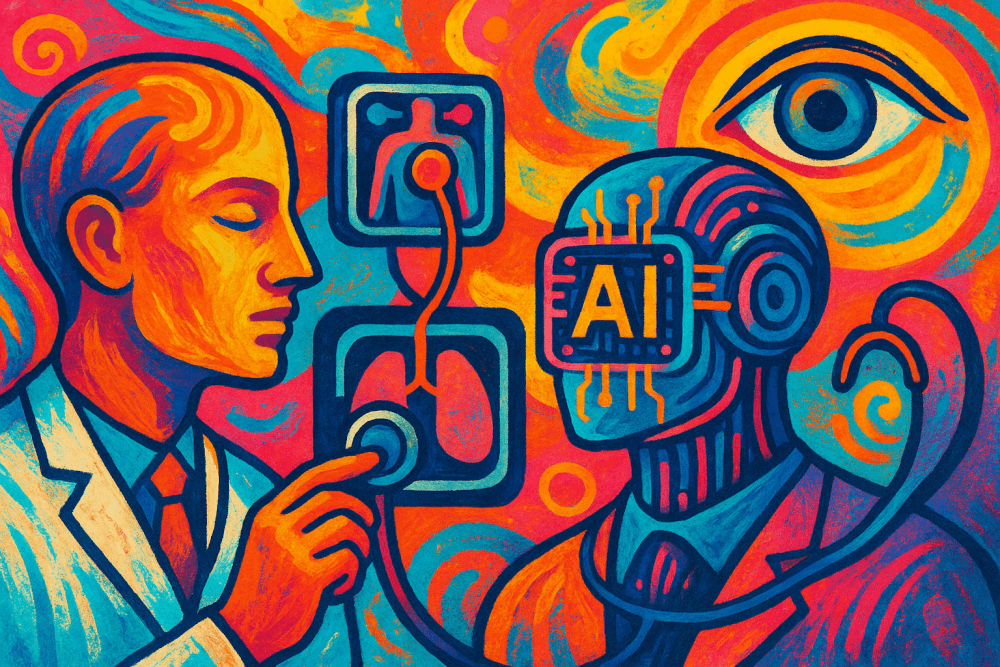
AI models process thousands of images or patient records rapidly, flagging subtle anomalies and prioritizing cases that need urgent attention. In imaging, convolutional neural networks match or exceed human performance for specific tasks, reducing false negatives and shortening turnaround times. Automated workflows also free radiologists and pathologists from repetitive screening so they can focus on complex interpretation and patient management.
Real-World Applications and Impact
Imaging and Screening
In radiology, AI assists tumor detection, lung nodule classification and fracture identification. Ophthalmology tools screen for diabetic retinopathy from retinal photos with high sensitivity, enabling referral before vision loss. In pathology, image analysis accelerates slide review and quantifies biomarkers, supporting more objective diagnoses.
Early Disease Prediction
Predictive models use longitudinal EHR data, genomics and imaging to estimate risk for cardiovascular events, certain cancers and sepsis. Early risk signals allow targeted screening and proactive interventions that can change trajectories of disease and reduce emergency admissions.
The Future of Health Diagnoses
Immediate benefits include improved diagnostic consistency, faster triage and measurable gains in patient outcomes. Adoption will expand as systems gain regulatory approvals, integrate into clinical decision support, and undergo prospective validation. Sustained progress depends on diverse training datasets, transparent performance metrics and clinician oversight so AI supports safe, equitable care.
For clinicians and health leaders, AI offers a path to more timely diagnoses and more efficient workflows, while keeping patient safety and real-world validation at the center of deployment.