
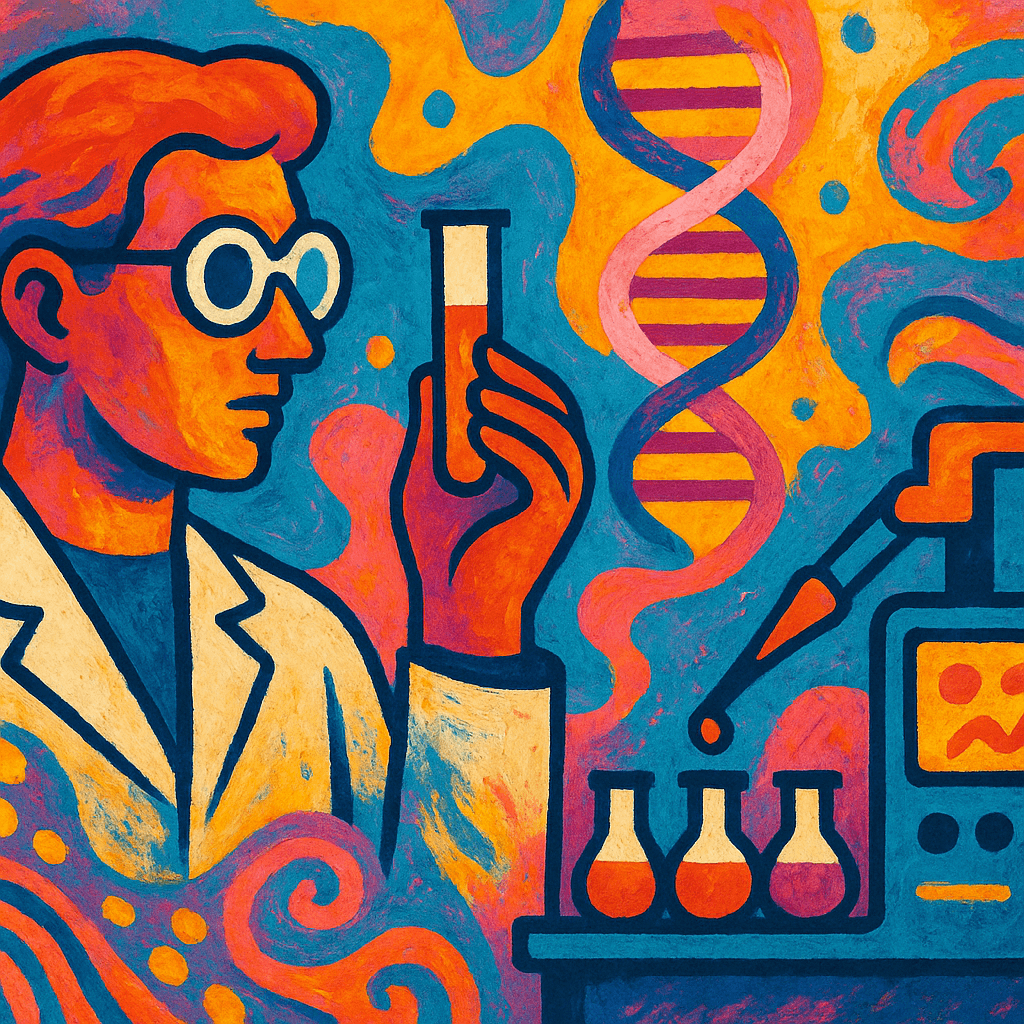
Adaptyv announced a $40 million Series A led by Highland Europe to expand its agentic biology platform and automated wet labs. The startup positions itself to solve a core bottleneck in AI-driven biology: model outputs far outpacing the capacity for physical testing. The new capital will scale lab capacity, broaden modality coverage and accelerate customer projects across biotech and pharma.
Addressing AI’s Bottleneck in Biotech
Modern generative models can produce orders of magnitude more candidate molecules and protein designs than traditional labs can test. That mismatch delays validation, raises costs and limits iteration speed for drug discovery. Adaptyv takes an opposite infrastructure bet by prioritizing physical experimental throughput alongside model development. Its aim is to make wet-lab access as elastic as compute so AI hypotheses can be validated rapidly and at scale.
The “Agentic Biology” Approach
Adaptyv combines autonomous software agents with robotic wet-lab execution to close the design-build-test-learn loop. Agents translate computational designs into lab protocols, queue experiments in automated instruments and analyze results to inform subsequent design cycles. This direct-access model allows AI systems to run experiments without manual handoffs, shortening turnaround and reducing human error.
Adaptyv has pointed to collaborations that demonstrate the platform’s viability, including work integrating external models such as Anthropic’s Claude as decision-making agents. Those integrations illustrate how third-party models can drive experiments end to end through Adaptyv’s infrastructure.
Impact and Future Outlook
With $40 million in new funding, Adaptyv plans to expand lab footprint and service offerings, move beyond pilot deployments and support more modalities and higher throughput workstreams. The company frames its long-term vision as a biological gigafactory where AI-generated designs are tested and iterated at industrial scale, enabling faster lead selection and de-risked programs for partners. If successful, this physical scaling could shift where value accrues in AI-enabled drug discovery by matching experimental capacity to computational inventiveness.