AI in Diagnostics: Advancing Patient Care
Artificial intelligence is reshaping medical diagnostics by adding algorithmic analysis to traditional clinical judgment. From automated image interpretation to risk stratification, AI systems assist clinicians in detecting disease earlier, reducing workload, and standardizing interpretations across teams.
Key Applications: From Imaging to Clinical Insights
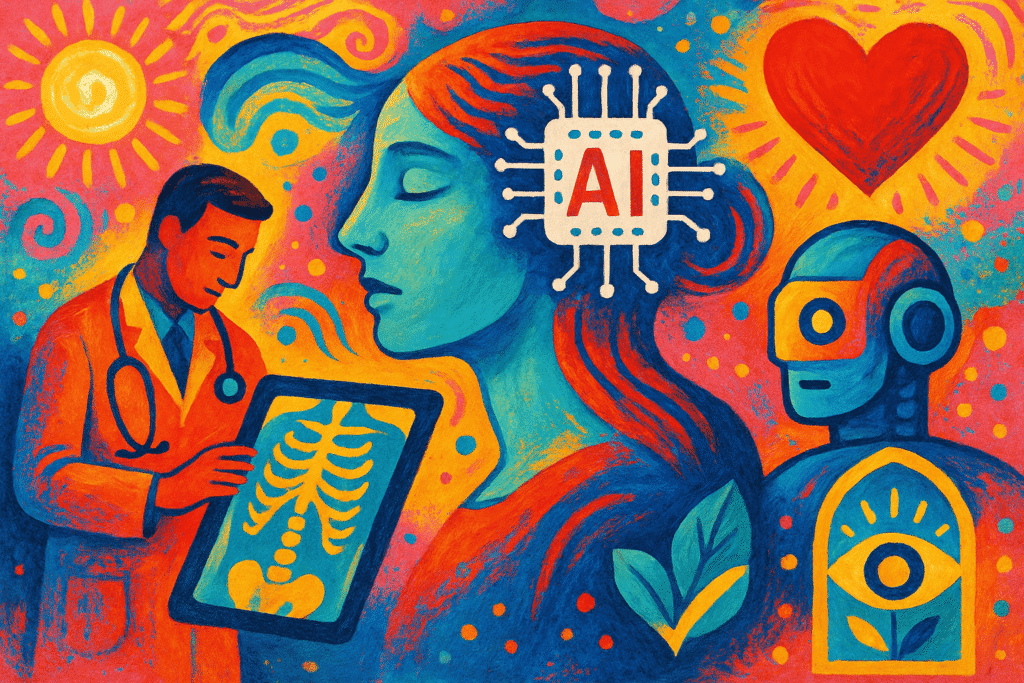
Medical imaging is the area with the most immediate impact. Algorithms for radiology and digital pathology can flag lesions, quantify volumes, and prioritize studies for rapid review. In screening programs these tools can increase sensitivity and reduce time to diagnosis. Clinical decision support systems use structured and unstructured health data to highlight high-risk patients, summarize records, and suggest follow-up testing. Combined, these applications shorten diagnostic pathways and support more consistent care.
Responsible AI: Oversight, Ethics, and Regulation
Responsible deployment means protecting patient data and minimizing algorithmic bias. Compliance with HIPAA, robust de-identification, and strong data governance are baseline requirements. Regulatory frameworks matter: the FDA reviews AI medical devices under medical device rules and post-market surveillance expectations. The EU AI Act treats many diagnostic tools as high risk, calling for conformity assessment and transparency. Developers must validate models on representative populations, document performance across subgroups, and operate clear incident reporting.
Human Oversight and Patient Safety
AI must support clinicians rather than replace them. Human oversight reduces harm from false positives and negatives and helps catch context-specific errors. Clinicians should interpret AI outputs, confirm critical findings, and retain final responsibility. Continuous monitoring and model retraining are necessary to maintain safety and relevance as populations and clinical practice evolve.
The Future of Intelligent Diagnostics
Near-term trends include multimodal models that combine imaging, genomics, and EHR data, federated learning to protect privacy, and point-of-care AI for faster decisions. Success will depend on rigorous validation, transparent performance metrics, and regulatory pathways that balance innovation with patient protection. AI is set to be a practical assistant to clinicians, supporting more personalized and timely diagnoses.
Health AI Insiders will continue to track developments in AI diagnostics, regulation, and real-world performance.