The AI Imperative in Modern Healthcare
Healthcare systems face rising costs, workforce shortages and rising demand for personalized care. Artificial intelligence helps address these pressures by automating routine tasks, accelerating research workflows and turning large clinical and molecular datasets into usable insights. Adoption is now a strategic priority across pharma, diagnostics and device makers.
Industry Leaders Driving AI Healthcare Transformation
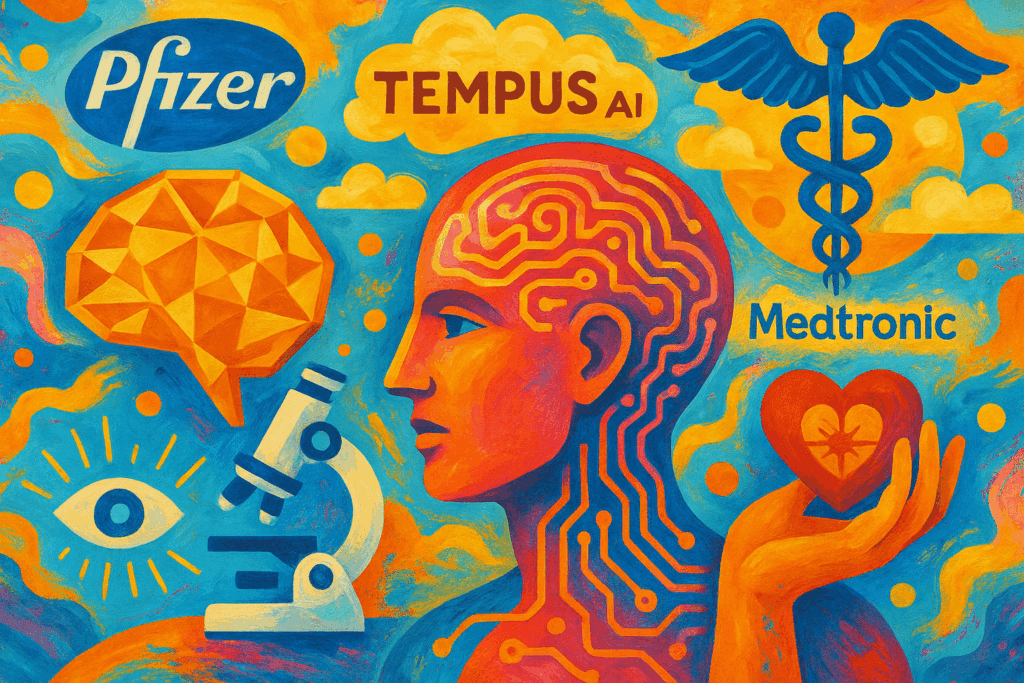
Several established and emerging companies are integrating AI into core operations. Below are three examples that illustrate different applications across the care continuum: drug discovery, precision medicine and medical devices.
Pfizer: AI in Drug Discovery and Development
Pfizer combines internal data science teams with external partnerships to shorten timelines for target identification and candidate selection. AI models are applied to sift preclinical data, predict molecular properties and prioritize compounds for testing. In clinical development, machine learning supports trial design, patient selection and real-world evidence analyses, which can reduce failure risk and speed regulatory filings. These uses focus on improving R&D productivity rather than replacing clinical judgment.
Tempus AI: Data-Driven Precision Medicine
Tempus operates a platform that links genomic sequencing, pathology and clinical data to AI-powered interpretation tools. The company’s models help identify biomarkers, match patients to targeted therapies and provide oncologists with context-rich reports at the point of care. By standardizing diagnostic data and enabling large-scale analyses, Tempus aims to make precision therapies more actionable for clinicians and researchers.
Medtronic: Medical Devices, Robotics and Therapy Optimization
Medtronic is embedding algorithmic decision support across devices and surgical systems. Machine learning contributes to surgical planning, instrument guidance in robotics and adaptive control in implanted therapies. AI-enabled remote monitoring and predictive analytics also support chronic disease management, giving care teams timely alerts and richer longitudinal insights.
Looking Ahead: The Evolving Landscape of AI in Healthcare
These companies illustrate distinct strategic approaches: pharmaceutical R&D acceleration, data-first precision diagnostics and device-level intelligence. Broader adoption will depend on rigorous validation, data interoperability, transparent algorithms and clinician workflow integration. Over the next five years, expect continued investment in hybrid models that combine clinical expertise with AI to improve outcomes, reduce avoidable costs and expand personalized care options without offering investment guidance.