AI Transforms Disease Detection
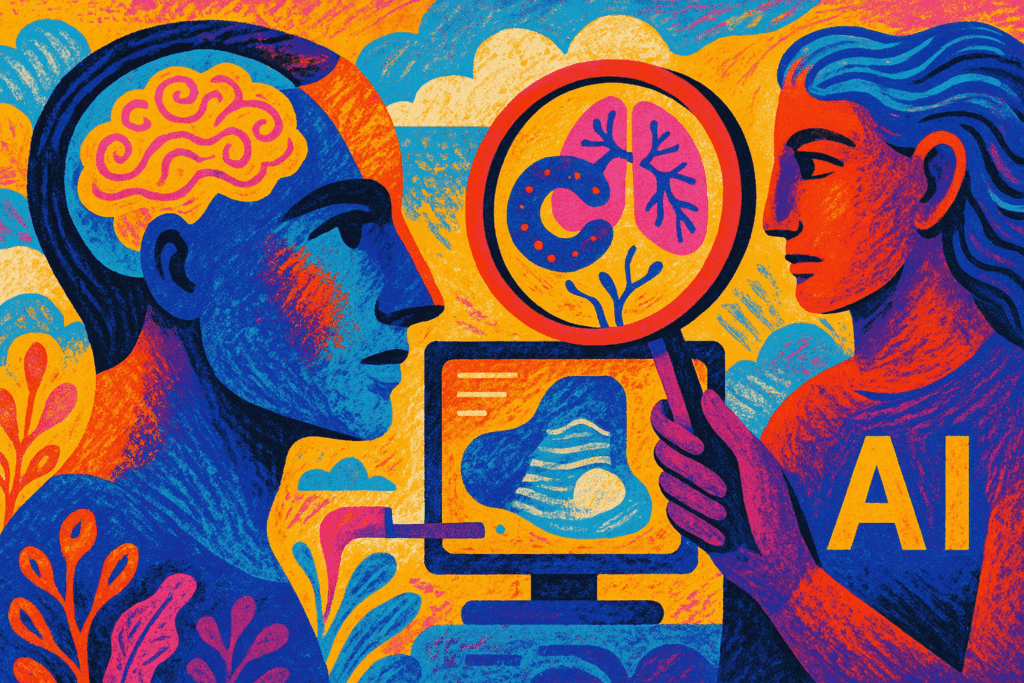
AI systems can analyze large volumes of medical images and spot subtle patterns that are easy to miss by eye. In radiology and pathology, algorithms trained on CT, MRI, X-ray and ultrasound images accelerate identification of cancers, lung disease and other conditions. That speed helps move patients from suspicion to treatment faster, while improving consistency across readers.
Data and Doctor Collaboration: The Core of Effective AI
Large, diverse datasets are needed for reliable AI. Models trained on images from multiple populations, scanners and clinical settings produce fewer blind spots. Data quality, careful labelling by experts, and external validation are the foundation of trustworthy systems.
AI is most valuable when it supports clinicians rather than replaces them. Practical deployments highlight three roles for AI:
- Prioritization: triaging urgent cases to speed review.
- Augmentation: marking areas of concern and providing probability scores to inform decisions.
- Standardization: reducing inter-reader variability with consistent measurements and reports.
Integration into existing workflows, such as PACS and electronic records, plus clear interfaces and explainable outputs, keeps clinicians in control while improving productivity.
The Future Landscape of AI in Diagnostics
The next phase is multimodal diagnostics that combine images with lab results, genomics and clinical notes for more complete assessments. Real-time tools for bedside ultrasound, automated screening programs, and federated learning models that preserve privacy are likely to expand access and utility globally.
Regulatory validation, ongoing monitoring, and clinician education will determine how quickly and safely these tools scale. For healthcare leaders and innovators, the opportunity is to build systems that deliver faster, more consistent diagnoses while keeping human expertise at the center of care.