AI’s Growing Footprint in Biotechnology
Artificial intelligence is moving from lab demonstrations to real-world biotech applications. Recent breakthroughs in protein structure prediction and generative chemistry have given researchers tools to interpret biological systems faster and propose candidate therapies with unprecedented speed.
Accelerating Drug Discovery with AI
AI platforms now screen vast molecular libraries, prioritize targets, and model how small molecules or biologics might interact with proteins. Startups and large pharma report shorter timelines from target identification to lead optimization, lowering early-stage failure rates and cutting costs.
From Data to Discovery: A Closer Look
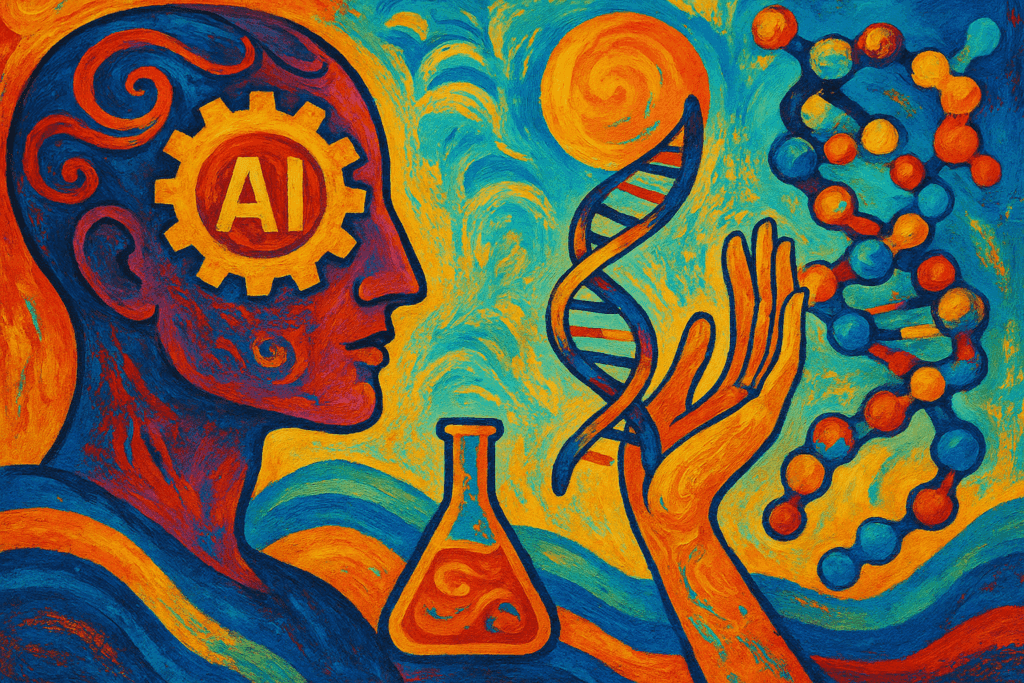
Machine learning systems analyze diverse datasets—genomic sequences, proteomics, high-throughput assay results and clinical records—to find patterns that humans might miss. Deep learning models can predict protein structures, suggest chemical modifications, and rank likely candidates for synthesis and testing. These models do not replace experiments; they focus laboratory effort on the most promising options.
Implications for Healthcare and Beyond
Patients could benefit from faster development of targeted therapies, more precise diagnostics, and treatments informed by individual genomic profiles. For industry, AI-driven workflows promise higher productivity and new business models that combine data science with traditional R&D. Investors see opportunities across AI tools, data platforms, and companies that bridge algorithmic insights with wet-lab validation.
The Path Forward for AI-Powered Biotech
Progress depends on better data sharing, reproducible benchmarks and regulatory pathways that match technological speed. Key challenges include data quality, model interpretability, intellectual property questions and integrating AI outputs into clinical trials. Short-term priorities are transparent validation studies, standards for datasets and stronger public-private collaboration.
AI is not a magic solution but a powerful accelerator. With rigorous validation and aligned incentives, AI can shorten timelines, reduce wasteful experiments and bring more personalized treatments to patients sooner.