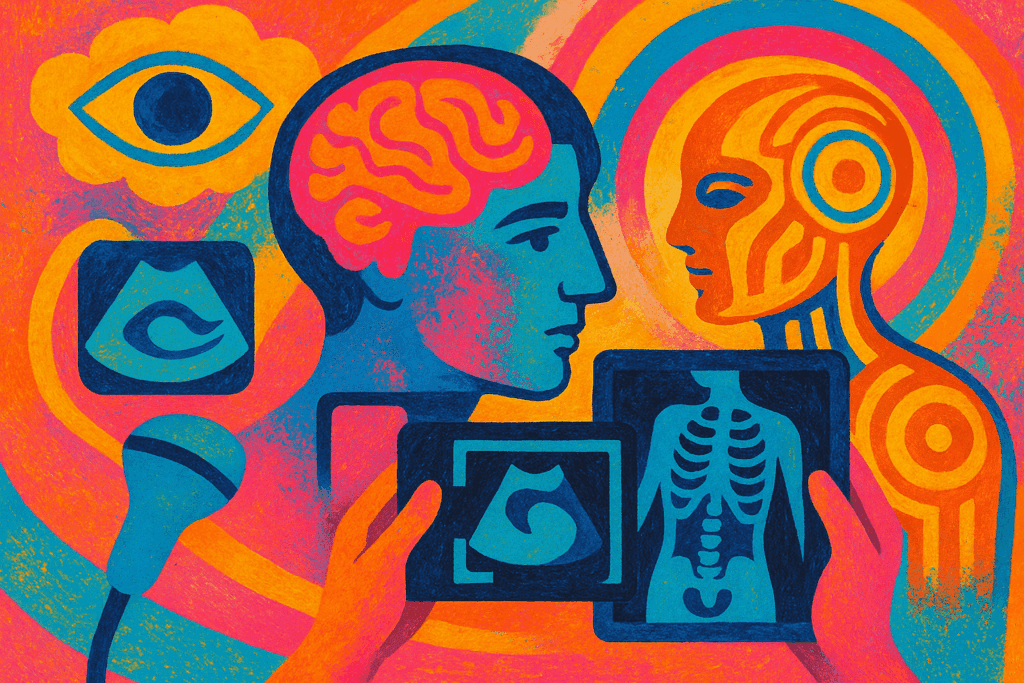
Artificial intelligence is redefining diagnostic imaging by applying machine learning and deep learning to X-ray, CT, MRI, and ultrasound data. With rapid pattern recognition and predictive capabilities, AI helps teams detect anomalies faster and supports clearer clinical decision-making while working alongside radiologists and specialists.
AI Transforms Image Analysis
Convolutional neural networks and other deep learning models process large image datasets to identify patterns that may be subtle or variable across patients. These systems perform tasks such as segmentation, lesion detection, and classification with speed and repeatability. AI can flag potential abnormalities, quantify volumes and changes over time, and prioritize studies that need urgent review.
Supporting Clinical Expertise
AI functions as an assistant to human specialists rather than a substitute. By reducing routine workload and surface-level variability, AI frees clinicians to focus on complex interpretation and patient communication. Model outputs are most valuable when presented as transparent, contextualized findings that clinicians can review and validate. Combined workflows improve diagnostic throughput and may reduce missed findings.
Advancing Precision and Efficiency
AI-driven measurements can support personalized treatment plans through quantitative biomarkers and predictive analytics. Faster triage and more accurate readings help reduce length of stay, repeated imaging, and unnecessary interventions, which can lower costs and improve patient outcomes. Integration with electronic health records enables longitudinal tracking and risk stratification across populations.
Responsible Integration and Future Growth
Adopting AI requires attention to data privacy, robust clinical validation, bias assessment, and clear regulatory compliance. Prospective trials and real-world performance monitoring are necessary to confirm safety and generalizability across devices and populations. Training programs should teach clinicians how to interpret model outputs, identify failure modes, and maintain clinical judgment.
When applied thoughtfully, AI is a powerful ally that augments diagnostic accuracy, speeds care delivery, and supports more personalized medicine. Its value rises with careful validation, transparent design, and ongoing collaboration between technology teams and clinical users.