
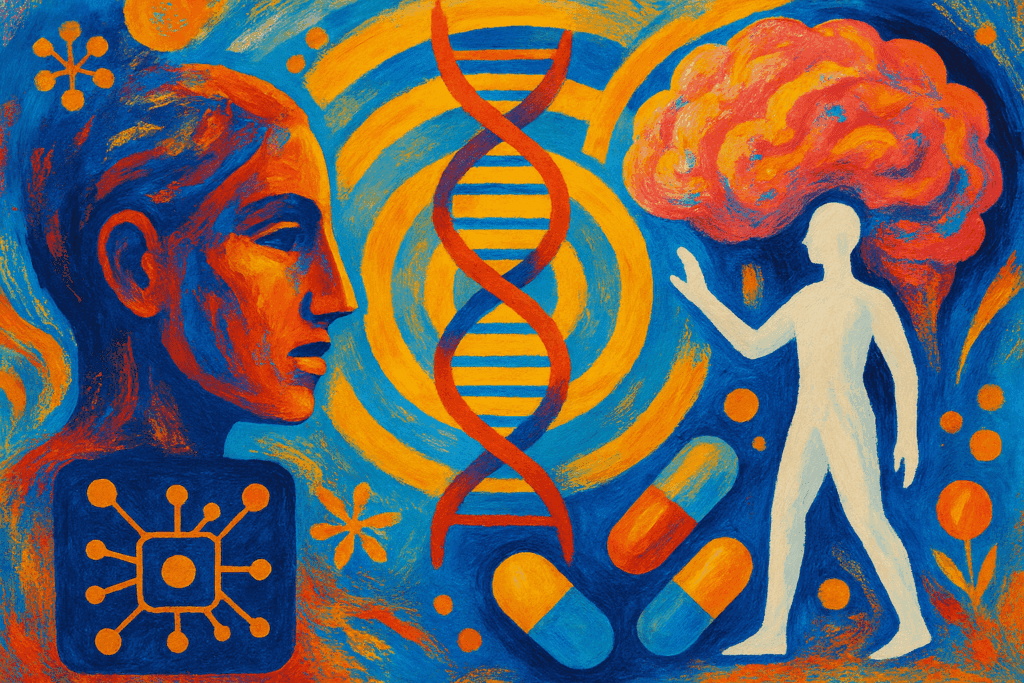
AI-Driven Biotech Revolution
Artificial intelligence is compressing years of lab work into months of computation. From generative chemistry to protein structure prediction, modern ML systems reduce the time and cost to identify candidate molecules and targets. Tools inspired by AlphaFold and foundation models now surface biologically plausible structures and prioritize leads for experimental validation, speeding discovery cycles while lowering initial risk.
Agile Start-ups: Outpacing Big Pharma
Specialized start-ups move faster than traditional R&D organizations because they pair focused teams with cloud compute, modular platforms, and tight feedback loops to iterate on models and experiments. Large pharmaceutical firms retain scale and regulatory know-how, but young companies win early advantages through concentration on a single modality, closer alignment with academic partners, and flexible partnerships that unlock external data and lab automation.
Data Access as the Fuel
Access to genomic and clinical datasets is decisive. Public resources such as UK Biobank, plus private provider partnerships and federated learning arrangements, supply the training signals AI requires. Teams that combine clean pipelines, domain expertise, and legal pathways to data capture convert model outputs into clinically testable hypotheses. Investors should look for reproducible datasets, transparent validation, and clear patient-consent frameworks.
Beyond Discovery: Operational Impact in Healthcare
AI is not limited to molecular innovation. Start-ups are improving hospital throughput, automating imaging interpretation, triage, and EHR workflows, and enabling remote monitoring with predictive alerts. These operational wins create revenue paths while clinical programs mature.
The Road Ahead
Expect a hybrid ecosystem where platform companies supply models and tools, while vertically integrated start-ups push specific therapeutic assets into the clinic. Regulation and clinical validation will shape winners. For founders and investors, prioritize teams with data access, domain credibility, and early experimental validation. For researchers, seek interoperable data standards and clinical partners to translate models into impact.
AI-driven start-ups are not simply speeding existing processes. They are reshaping how biology is modelled, tested, and brought to care. The next decade will favor those who combine technical depth with real-world data and rigorous validation.